
Asphalt vs. Concrete Driveways: Which Is Better for Minnesota Homes?
Key Takeaways / Summary:
- Asphalt offers lower initial installation costs and flexible performance during severe freeze-thaw cycles.
- Concrete provides a longer overall lifespan with higher upfront costs and requires careful deicing management.
- Selecting the right material depends on your specific budget, maintenance preferences, and suburban home aesthetic.
Choosing the right material for your suburban driveway is a significant home improvement decision. Unlike many Twin Cities contractors that only offer a single material, Asphalt Driveway Company has installed both asphalt and concrete flatwork since 1951. Based out of Maplewood, our team has completed many projects across the Minneapolis and St. Paul area.
Key Differences Between Asphalt and Concrete for Twin Cities Driveways
The primary differences between these two materials come down to composition, appearance, and installation timing.
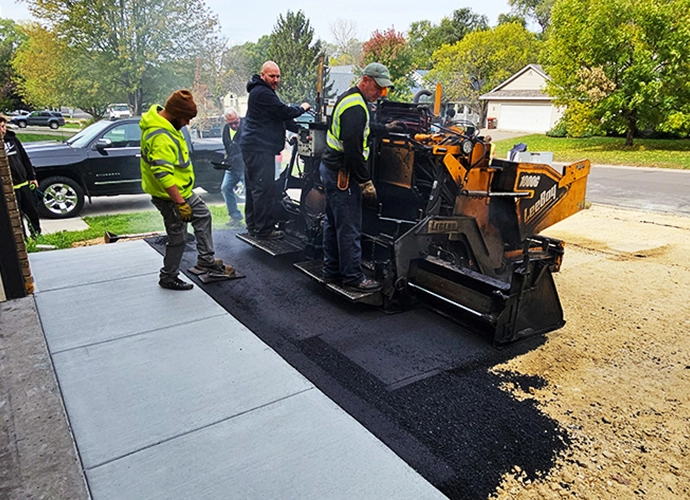
Asphalt is a mix of aggregate bound by petroleum-based bitumen, resulting in a dark, classic look. Asphalt installation relies on warmer weather, so we install asphalt driveways from mid-April through mid-November. However, we provide free estimates year-round.
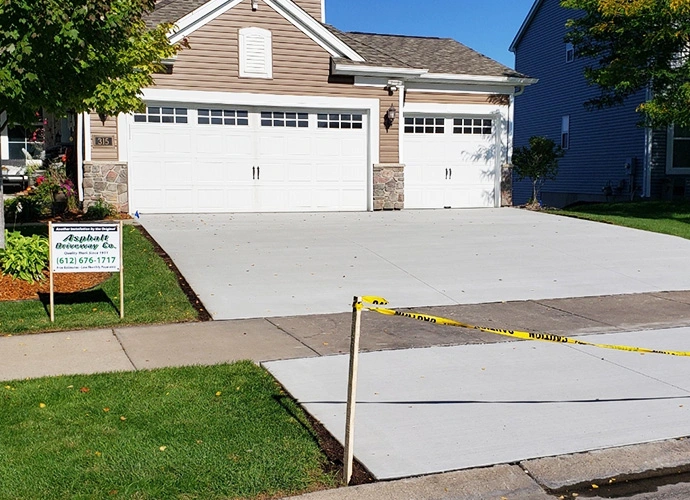
Concrete is a mixture of cement, water, and aggregate that cures into a lighter gray surface. Concrete installation requires proper care for the most durable concrete. Caring techniques vary depending on the job site and weather conditions.
Both options deliver excellent functionality for suburban driveways, garage floors, sidewalks, and steps.
Cost, Durability, and Freeze-Thaw Performance in Minnesota Winters
Cost and climate performance are top considerations for Minnesota homeowners. Asphalt generally carries a lower upfront installation cost, making it an attractive option for large suburban driveways. Concrete requires a higher initial investment but often lasts 30 years or more with proper care.
Minnesota winters bring extreme weather cycles that test any flatwork surface. Asphalt is naturally flexible, allowing it to expand and contract as the ground freezes and thaws without easily cracking. Its dark color also absorbs heat from the sun, helping snow and ice melt faster.
Concrete offers a rigid, durable surface, but it can be susceptible to surface scaling if exposed to salt and harsh chemical deicing products during freezing conditions.
Maintenance and Repair: Keeping Your Suburban Driveway in Top Shape
Ongoing care keeps both materials performing well for decades:
- Asphalt Care: Expect to apply sealcoating every three to five years to protect from moisture and UV damage. Small cracks can be easily filled to prevent water penetration.
- Concrete Care: Apply a quality concrete sealer every few years to guard against moisture intrusion and salt damage. Avoid using sodium chloride or chemical deicers, opting for sand for traction instead.
When repairs are needed, asphalt is generally simpler and less expensive to patch. Concrete repairs require specialized techniques to ensure a seamless look, but routine maintenance minimizes major issues for both surfaces.
Why Twin Cities Homeowners Trust Asphalt Driveway Company for Honest Advice
As a family-owned, fully licensed, and insured contractor, we bring years of hands-on experience to every residential project. Ready to transform your home with a new driveway, sidewalk, apron, or garage floor? Contact our office today at 612-676-1717 for your free estimate.